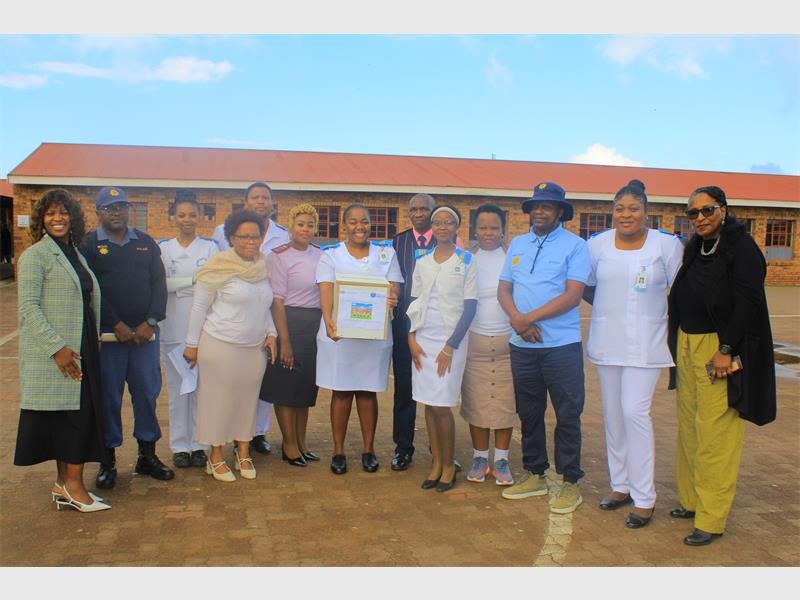
Kwa-Thema – Ann Latsky Nursing College students, social workers and members of the SAPS educated Kwa-Thema Primary School learners about bullying on April 20.
Reabetswe Lamon, a student nurse from the college, said the initiative formed part of their training in community health practice.
“Our project was based on community assessment findings. The school identified that they were experiencing problems, and we prioritised those needs to develop a programme that could help reduce the associated impacts,” she explained.
Through their assessment, the student nurses worked with learners and school stakeholders to understand the nature of bullying, how it manifests, and its emotional and physical effects on learners.
“We looked at how bullying can be identified and how it can be addressed within the school and through collaboration with health facilities,” she added.
During various addresses, the professionals identified and explained what bullying was and educated on the different types of bullying. Part of the programme aimed to shift learners’ understanding and attitudes.
“Many learners begin to recognise when they are being bullied and how it makes them feel unsafe or uncomfortable.
“The goal is to create a school environment that is conducive to learning, where both emotional and physical safety are prioritised,” she said
Lamon also highlighted the importance of involving police in awareness efforts. She noted that exposure to law enforcement and education around consequences can help discourage harmful behaviour at an early age.
“Having SAPS involved is important because bullying behaviour can sometimes escalate into more serious actions later in life if not addressed.
“Early intervention helps learners understand accountability and respect for others,” she said.
To encourage reporting of incidents, the nurses introduced a suggestion box system that allows learners to report bullying incidents confidentially.
A social worker, Zanele Makhubo, educated the learners about the dangers of social media. She emphasised the importance of avoiding adult sites and chatting to strangers.
“Learners, I want you to understand that social media can be very dangerous if it is not used responsibly.
“You are often exposed to inappropriate content that can affect the way you think and behave, even when you don’t realise it,” she added.
ALSO CHECK: Parents lead Autism Awareness Month campaign to fight stigma and promote inclusion
“Talking to strangers online can put you at serious risk of being manipulated or harmed. Always protect your personal information and be careful about who you interact with,” she cautioned.
She urged learners to avoid giving strangers their personal information, including their home address and school information.
She further advised them to avoid posting pictures of themselves in school uniform. School principal, Abigail Nyembe, highlighted that bullying is a growing problem at the school.
Nyembe explained that many children also face bullying at home and, as a result, bully other children at school.
She urged parents to love their children enough and teach them about the dangers of bullying.
“Our learners are bullying each other, they are fighting at school and even outside the school premises.
“It happens during break time and even while teaching is taking place. Charity begins at home. Most of these learners experience problems at home and then bring those issues to school.
“That is where the fighting continues,” she explained. Parents should show love to their children and teach them how to behave.
“Children must learn to treat others with respect, even if they are not family.”
According to her, awareness campaigns led by student nurses and community partners are helping the school address these challenges more effectively.
ALSO CHECK: Healing Lives distributes over 18 000 Easter eggs, bringing hope to children across Ekurhuleni
She suggested that stronger parental involvement is essential in preventing bullying and improving learner behaviour.
Beyond bullying, Nyembe noted that the school also faces other behavioural challenges.
She explained that these challenges are often linked to unstable home environments where some children are left under the care of younger siblings or lack proper supervision.
“This is unfair on the children and often leads to behavioural issues and bullying,” she said.
Nyembe concluded by thanking all stakeholders who supported the school’s efforts to create a safer, more supportive learning environment.
At Caxton, we employ humans to generate daily fresh news, not AI intervention. Happy reading!