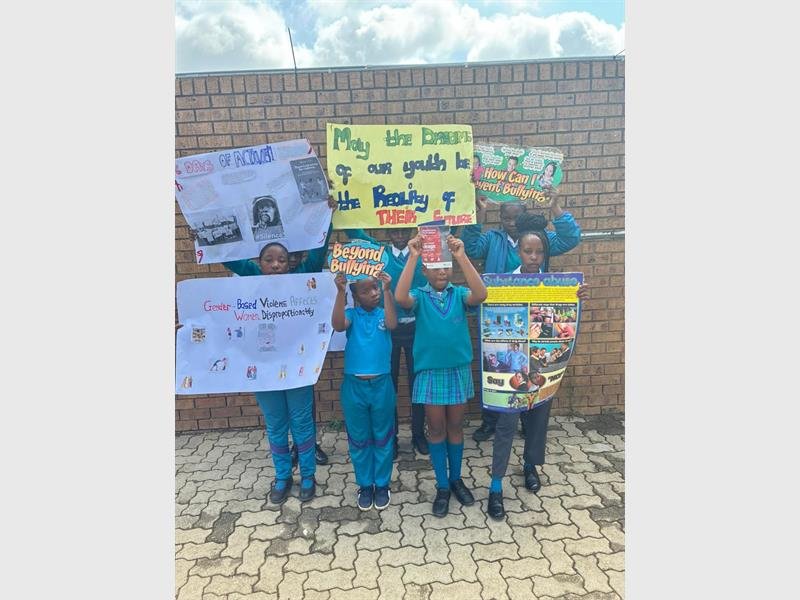
Tsakani – Bullying remains a serious issue in schools across the country, and managing it effectively requires a combination of policy, awareness, and community involvement.
Fikile Mabuza, a librarian and schoolteacher, spoke about bullying from a teacher’s perspective. She mentioned that bullying should be tackled promptly to prioritise student safety.
“Bullying is like a pandemic; it happens everywhere, at home and in schools. Children come from diverse family backgrounds and are exposed to different behaviours, but at school, we work hard to manage it,” Mabuza explained.
She mentioned that the school-based support teams should also manage bullying cases, saying that if a child experiences bullying regularly, the issue is escalated to the principal. They also keep records to ensure proper follow-up.
Primary schools have a life skills subject taught from the foundation phase to Grade Seven, emphasising the consequences of bullying and promoting positive social behaviour.
Emihle Lalu, Boitumelo Motahane, and Lwandle Nhlapho. Photo: Nomsa Ngubeni
Child psychologist Mpho Seakamela, said bullying can have profound psychological effects on children. In the short term, children may experience anxiety and hypervigilance, fear, persistent sadness or hopelessness, irritability, difficulty concentrating, sleep disturbances, stomach aches, headaches, and a decline in school performance.
“Social withdrawal and low self-esteem are also common. In the long term, the effects can be more persistent and severe.
“Children who are bullied may develop chronic anxiety, depression, or post-traumatic stress symptoms,” she explained.
“They might struggle with forming healthy relationships, experience low self-confidence, or have persistent feelings of shame and worthlessness.
“Some may even develop social phobias or engage in self-harm. The psychological scars can last into adulthood if the bullying is not addressed early.”
The school children designed the posters. Photo: Nomsa Ngubeni
Seakamela suggested that schools can create a safe, supportive, and protective environment by combining clear policies, consistent discipline, emotional support, and a positive school culture:
• Enforce clear anti-bullying policies with consequences that are consistent and fair.• Ensure supervision in high-risk areas like playgrounds, hallways, and bathrooms• Establish safe reporting mechanisms for learners.• Promote inclusive practices that celebrate diversity and difference.• Offer counselling and emotional support services.• Encourage peer support programmes, buddy systems, and mentoring.• Create a culture where respect, empathy, and kindness are taught and reinforced.
“The goal is to make every child feel protected, respected, and heard.
“Most importantly, there must be encouragement of parental involvement where parents are informed of policies and where strong collaborative relationships are built and maintained for the children,” she concluded.
ALSO READ: In loving memory of Thabo Thebe
ALSO READ: Government rescues trafficked SA youth exploited in Myanmar
At Caxton, we employ humans to generate daily fresh news, not AI intervention. Happy reading!