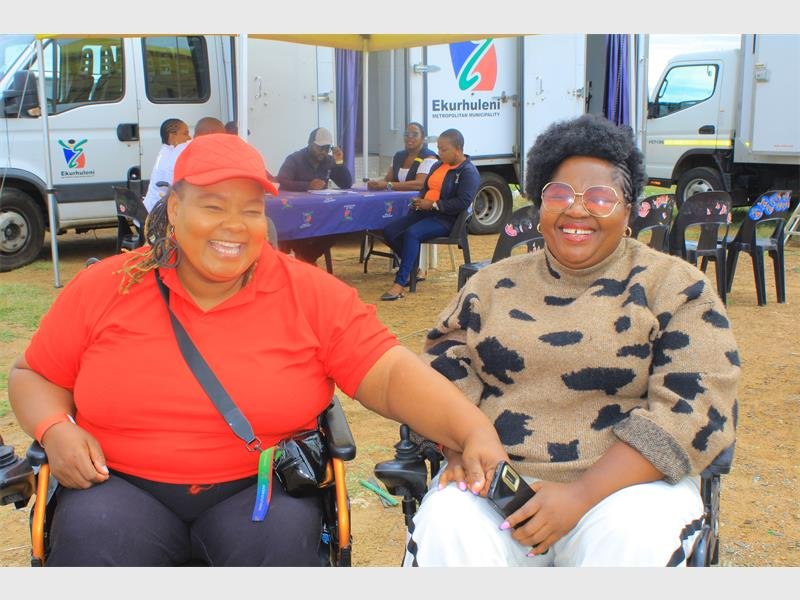
Kwa-Thema – Kopano Disability Movement held a health awareness event on March 13 at Kwa-Thema phase 3. The event aimed to address health challenges affecting people with disabilities, including HIV, Aids, sexually transmitted infections (STIs), and chronic illnesses.
Centre manager Kate Malope said community-based initiatives are key to improving access to health services for people living with disabilities. She explained that the initiative focused on community accountability and creating a platform for engagement between stakeholders and people with disabilities.
“This is a community accountability activity where we have invited different stakeholders to engage with people with disabilities. One of our biggest partners is civil society organisations,” Malope said.
Different stakeholders, such as WITS RHI, Ekurhuleni Mobile Clinic, Sivukile Community Project (pre-post HIV counselling services) and Old Mutual, offered advice and different services.
The programme also focused on conditions such as high blood pressure and encouraged people to seek medical support and adhere to treatment. When asked about the importance of bringing services directly to the community, Malope pointed to discrimination experienced at health facilities.
Kopano Disability Movement Centre manager, Kate Malope. Photo: Nomsa Ngubeni
“The biggest issue is discrimination at clinics and public facilities. Many people with disabilities feel unwelcome or judged, so they avoid seeking help. By bringing services closer to them, in a safe and familiar environment, they are more open to accessing assistance,” she added.
Malope highlighted stigma as the biggest hindrance to accessing health facilities.
“The stigma often stems from misconceptions about people with disabilities, particularly regarding their health and sexuality. People with disabilities are not always seen as individuals who are sexually active or in need of certain health services. This leads to discrimination when they seek help,” she said.
Malope stressed the importance of educating both people with and without disabilities to promote inclusion.
“We want to integrate people with disabilities into society and educate the broader community so that inclusion becomes a reality. Our goal is inclusion at all levels, be it at homes, communities, clinics, and institutions,” she cited.
Representatives of the Sivukile Community Project. Photo: Nomsa Ngubeni
She said the organisation runs various programmes throughout the year, including initiatives on gender-based violence, caregiver support, and skills development.
“We also focus on empowering people with disabilities through skills programmes and helping them explore their talents and ambitions,” she said.
She urged the public to change how they view people with disabilities.
“See the person first, not just the disability. People with disabilities are capable of contributing meaningfully to society,” she said.
Malope also called on families to support and not limit their loved ones.
“Do not hide people with disabilities. Allow them to grow, be independent, and show what they are capable of,” she mentioned. Organisations like ours are here to help people gain confidence and independence,” she said.
Thabiso Marota, Tshepo Moreni, Nonkuleleko Mabaso, Angie Mokoena and Herold Rana. Photo: Nomsa Ngubeni
Civil Society Forum chairperson and co-founder of Bring Change in Me, Miranda Lephoko, said their work focuses on raising awareness, promoting inclusion, and empowering people with disabilities both socially and economically.
Lephoko explained the importance of encouraging people, particularly those living with disabilities, to go for screening and testing.
“Knowing your status is important because it allows you to access the right support and treatment early. As the Civil Society Forum, we advocate for improvements so that everyone is treated equally. Inclusion is very important,” she said.
“One of the key recommendations we have for government and healthcare institutions is to employ more people with disabilities. We have many capable individuals who can make meaningful contributions.
“When people with disabilities are part of the workforce, it not only creates opportunities but also helps sensitise others and improve understanding of disability.”
Kate Malope and Miranda Lephoko. Photo: Nomsa Ngubeni
She raised another challenge, saying people with disabilities do not have equal opportunities as people without disabilities. She stressed that while the government is making efforts to include people with disabilities, many still do not qualify due to requirements such as matric certificates.
“Many individuals attended special schools or started school late, which affects their ability to meet these criteria. We encourage government to consider these challenges and create more inclusive opportunities that focus on skills and capabilities rather than just formal qualifications,” she stated.
Lephoko explained that there are many individuals with valuable skills, even those with intellectual disabilities.
“With proper assessment and support, they can contribute to skills development programmes. Government can play a significant role by funding and supporting organisations that provide these programmes.
“To those who are hesitant to test or seek health services, my advice is simple: take that step. When you see others doing it, it becomes easier,” concluded Lephoko.
ALSO CHECK: GALLERY: School appeals for information after theft of equipment in Kwa-Thema
ALSO CHECK: Duduza: SAPS arrests two in illegal mining bust, eight others for drugs
At Caxton, we employ humans to generate daily fresh news, not AI intervention. Happy reading!